Chirrp…mroww…purrrrrr…
Did you know cats can make at least 20 distinct vocal sounds?
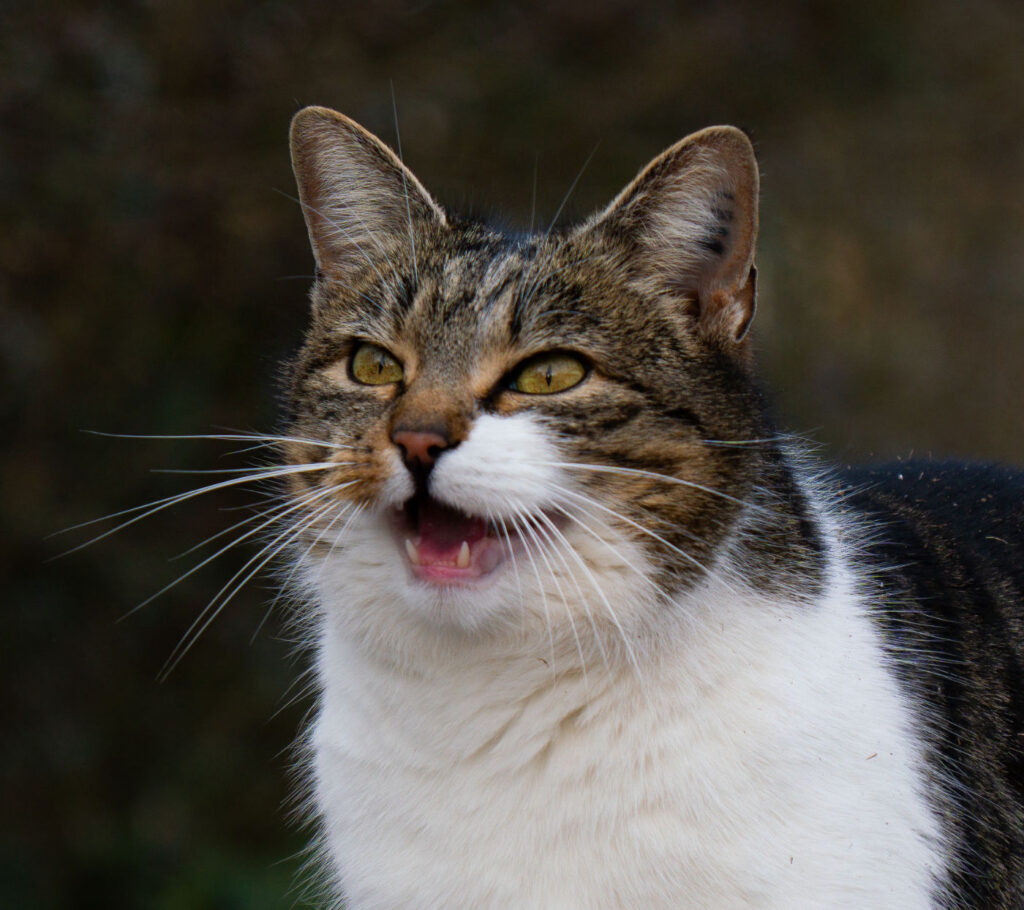
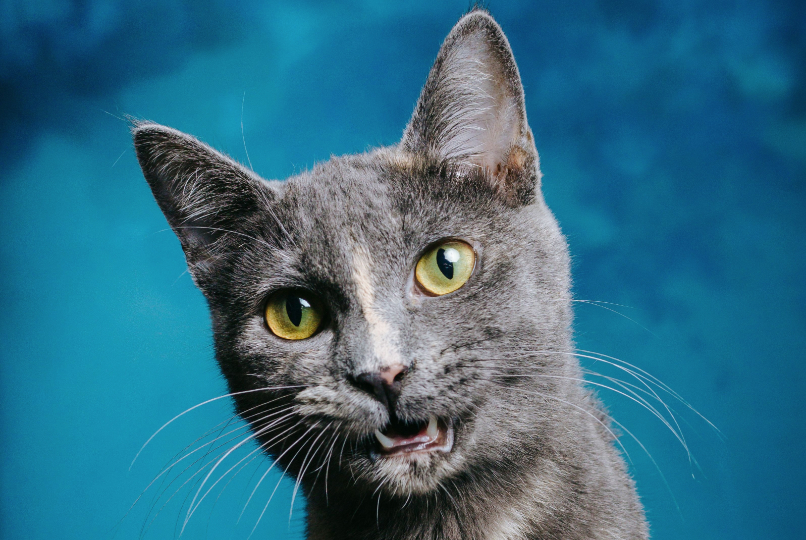
Meows and trills are the happy sounds they make in greeting or when asking for attention or food. Chirps and chatters are the sounds they make when watching prey.
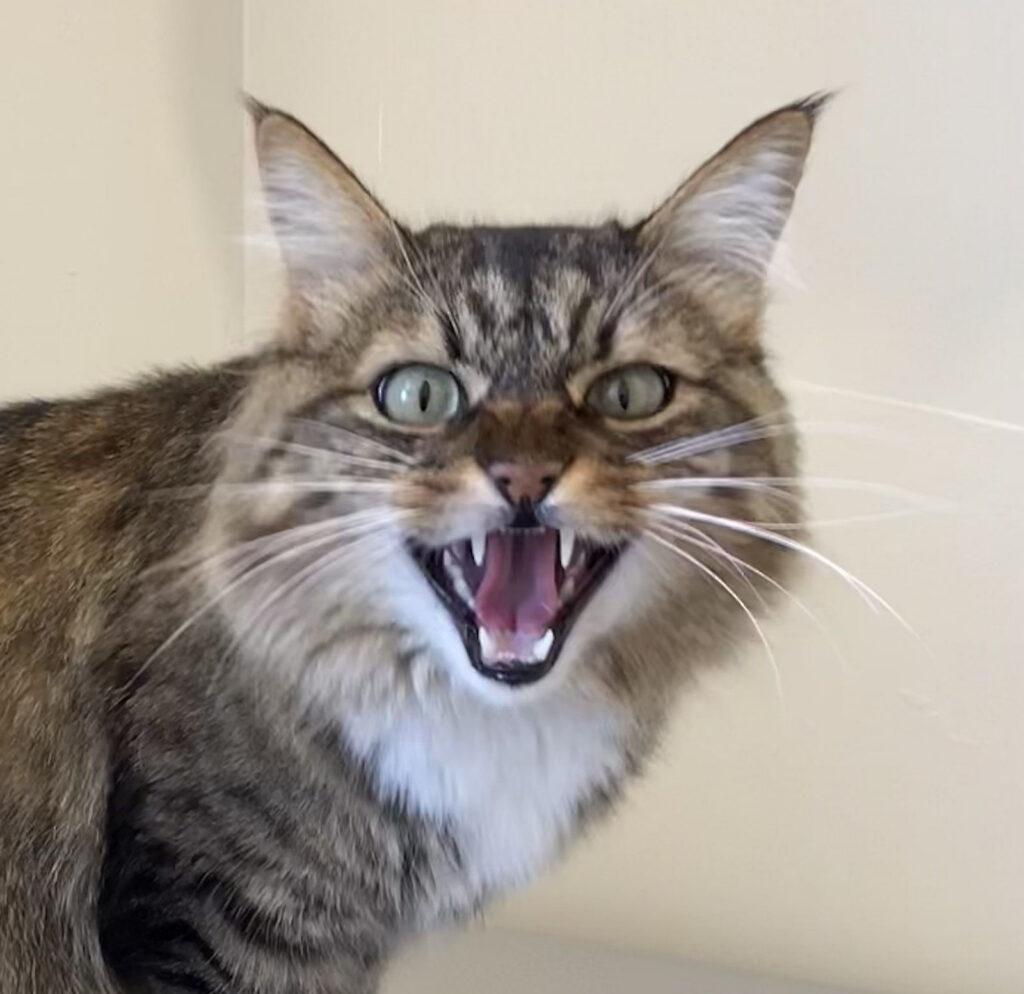
It doesn’t take an expert to know that growling means the cat wants you to back off! Hissing is milder, saying, “Hey I’m a little uncomfortable here so please give me some space.”
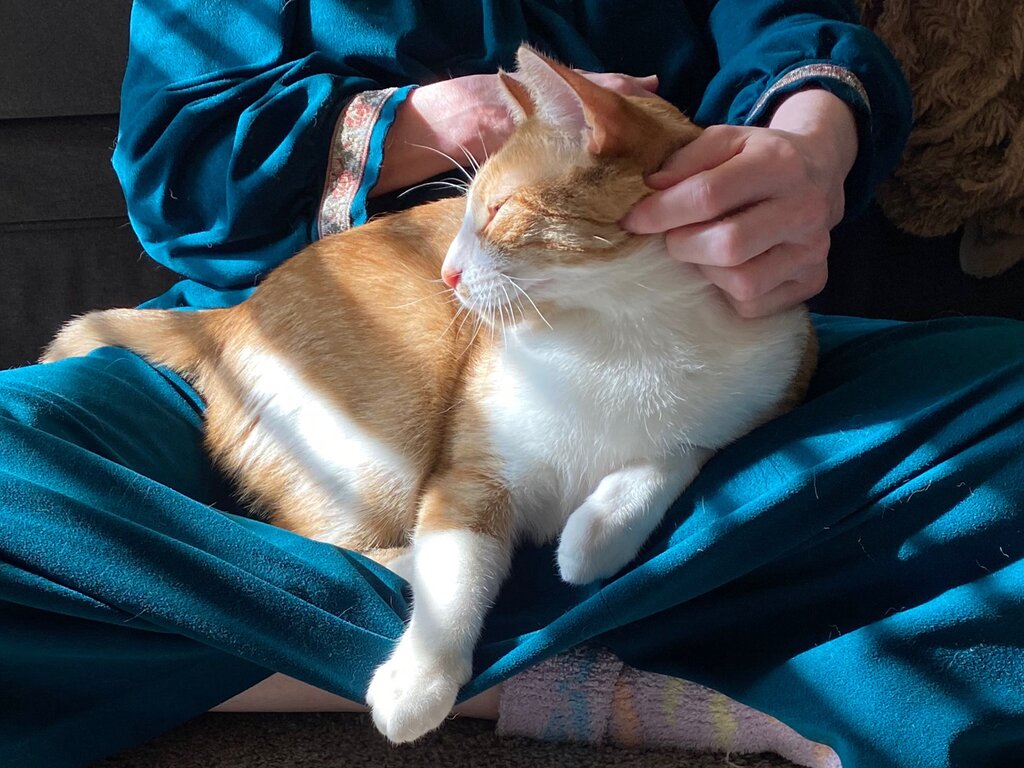
And of course there’s the purr, the most beloved of cat sounds. Not only is it calming to the cat, even in stressful situations for self soothing, but calming to humans too. Usually accompanied by slow blinks.
Cats can even interject a little squeak into their purrs that motivate us to pay attention even more. Some cats also use squeaky purring to ask for food or attention.
You’ve probably seen posts and memes about how cats only meow to humans not to other cats, once they’re no longer kittens calling their moms. There’s not much actual research on this, just anecdotal observation of cats in homes.
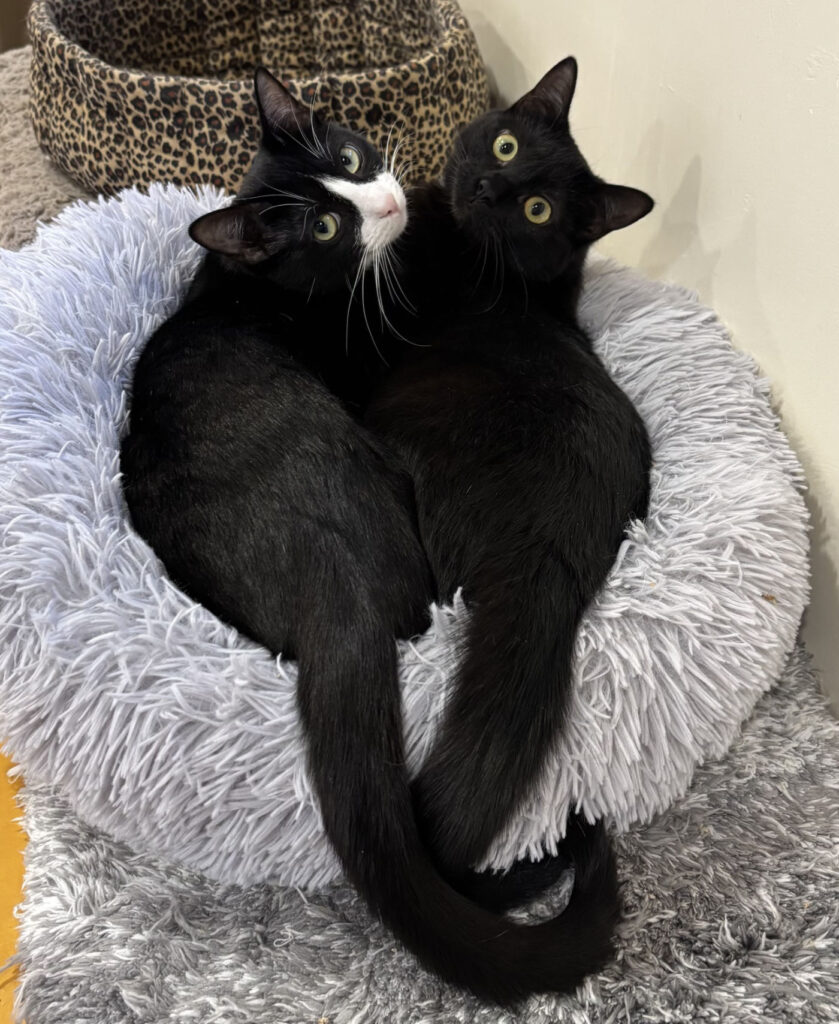
The reality is that cats who were raised together often chirp and trill in greeting. They just don’t make the loud, open-mouthed meows they do with humans. Perhaps they know they need to be loud to get our attention!
There’s a life-or-death reason for that. Cats in the wild are just as much prey as predator, and are often hunting solo. A noisy cat would draw in predators, so cats need to stay quiet to stay alive.
So how do you talk to your cat? You can start by respecting their hearing.
All sound is around 3 times louder to a cat than it is to you. You don’t necessarily have to coo and aah with squeaky baby talk, but turning down the volume is usually more welcome.
Since cats communicate quietly, body language is still their native language. Slow blinks and high tails will always tell you what they like.
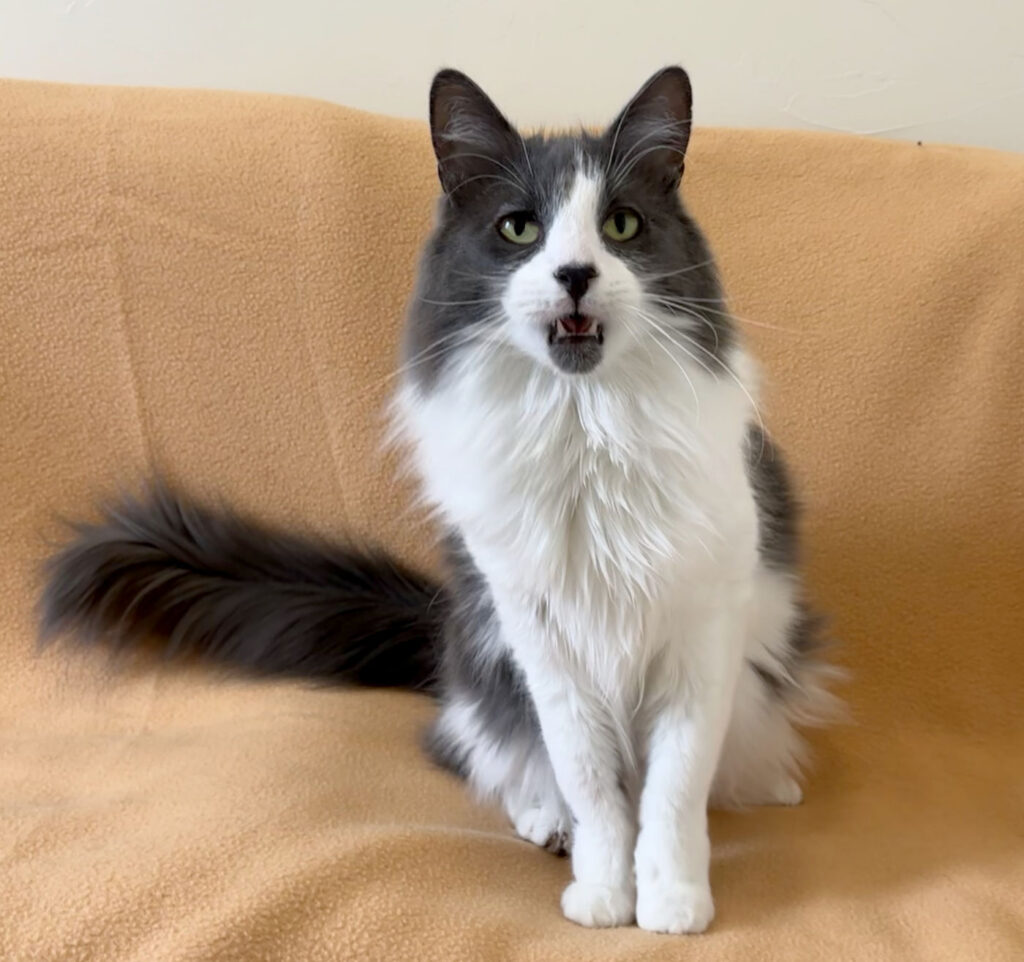
Using your cat’s name is probably the best way to talk to your cat. But cats only learn their names if we teach them!
You can get a cat to respond to a name—even if it’s a new one—within a few sessions of pairing the name with something pleasant, like a treat, playtime, or petting, if your cat appreciates that.
Their names can become the secret password they respond to the rest of their lives. This can be lifesaving if you ever have a crisis like a fire or evacuation. A cat who knows his or her name will be less likely to be left behind if the worst happens.
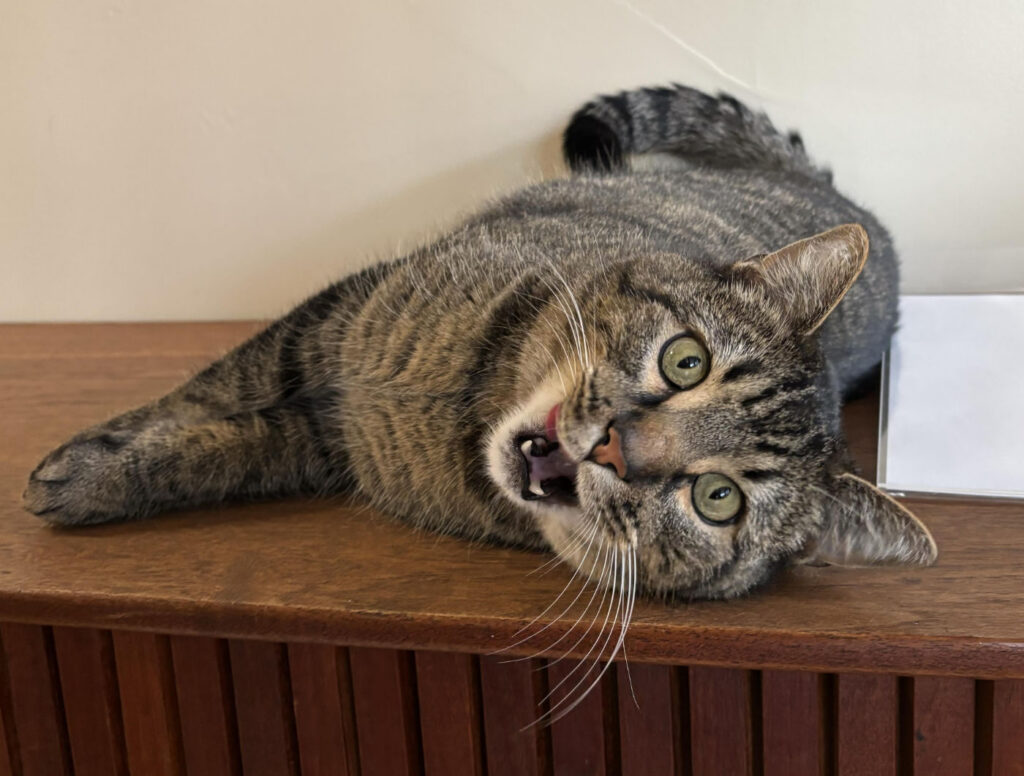
Another technique is to mimic the soft chirps and trills that a mother cat would use with her kittens. Many cats respond positively to those sounds, allowing you to expand your conversation with them.
Do you like a chatty cat? Most cats will respond in kind if you talk to them a lot. If you’re a talker, your cat is more likely to be chatty. If you’re quiet, your cat will likely be too.
Even if you aren’t specifically training your cats, praising them daily goes a long way towards building their trust with you. Telling your cats when they do something right, instead of just yelling when they do don’t, will make them more likely to want to please you.
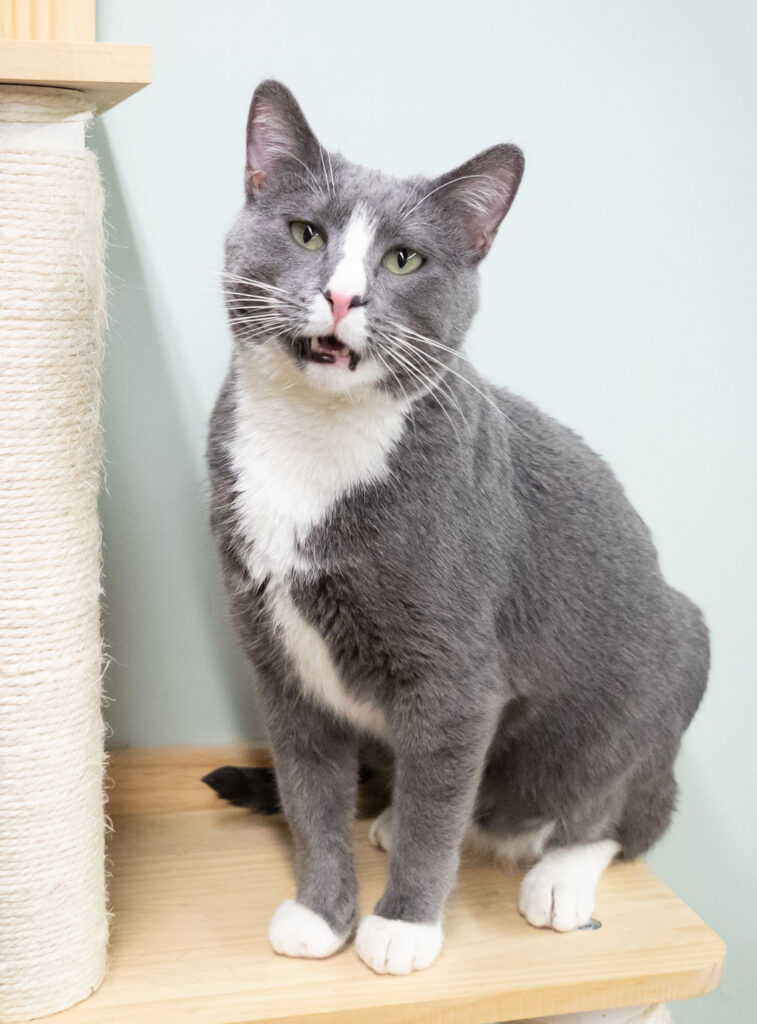
Experts believe the sounds we make to our cats, and them to us, become a distinct communication pattern that only exists between you and your cat. You probably know that your cats make certain sounds only with you…and you probably have certain words or phrases that you say only to them.
Whether chirping or meowing or simply saying, “Good kitty!”, building on your secret language can help you build a stronger bond with your best feline friend.
Tap here for more tips on how to have a happy cat!
Sara Ferguson is the Director of Happy Cats Haven in Manitou Springs, Colorado, where cats talk and everyone listens.