
It may not be everyone’s favorite holiday, but National Hairball Awareness Day is coming up in April! Most of us know that an occasional hairball is part of living with felines. So let’s talk hairballs…but you might want to hold off breakfast while we chat 🙀.
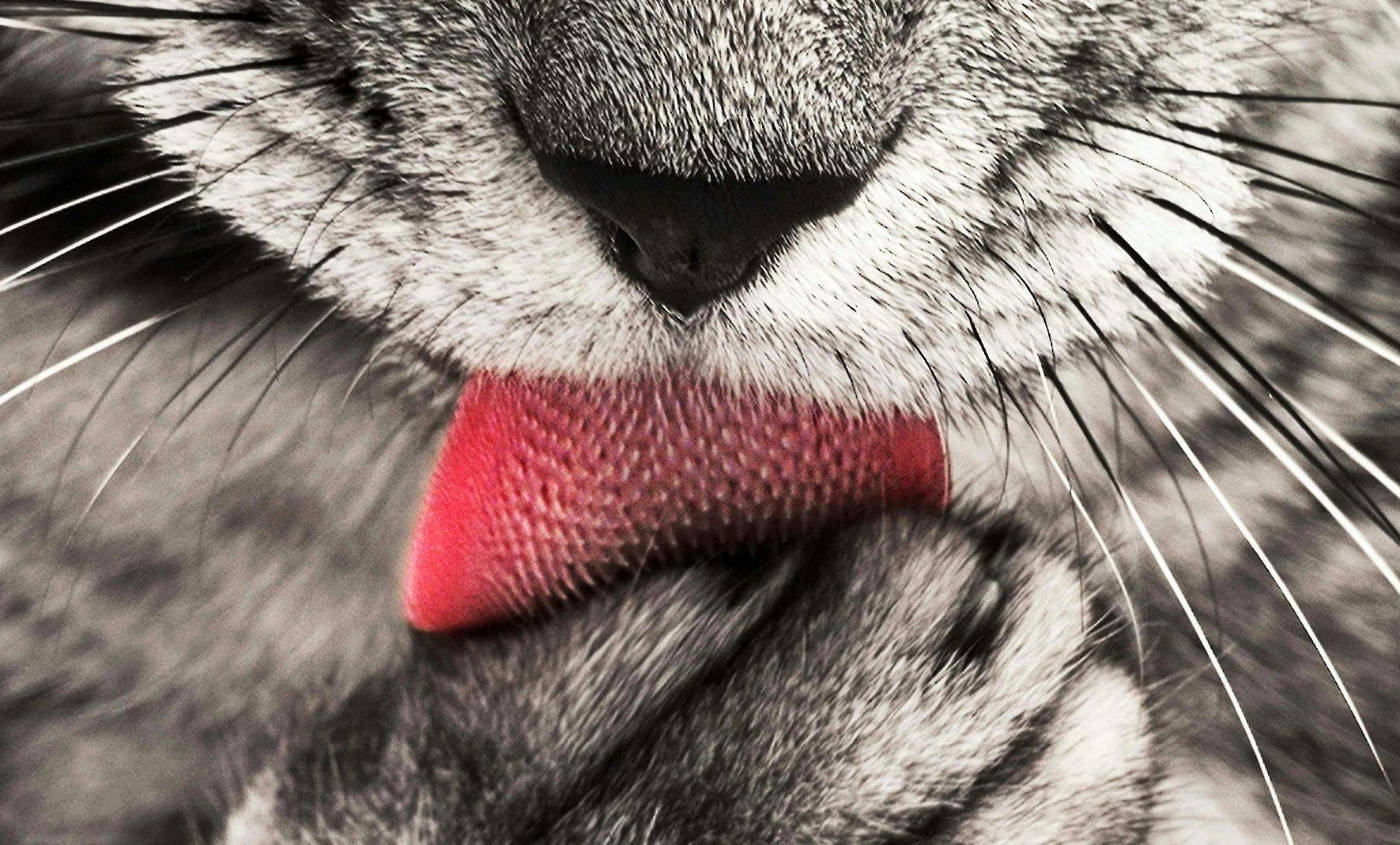
The scientific name for hairballs is trichobezoars, accent on the be. If your cat has ever given you kitty kisses, you may have noticed the not-so-gentle spiny hooks on his tongue.
These are called papillae, perfect for helping him comb through his fur during the grooming process. These papillae are made of keratin, like our own fingernails.
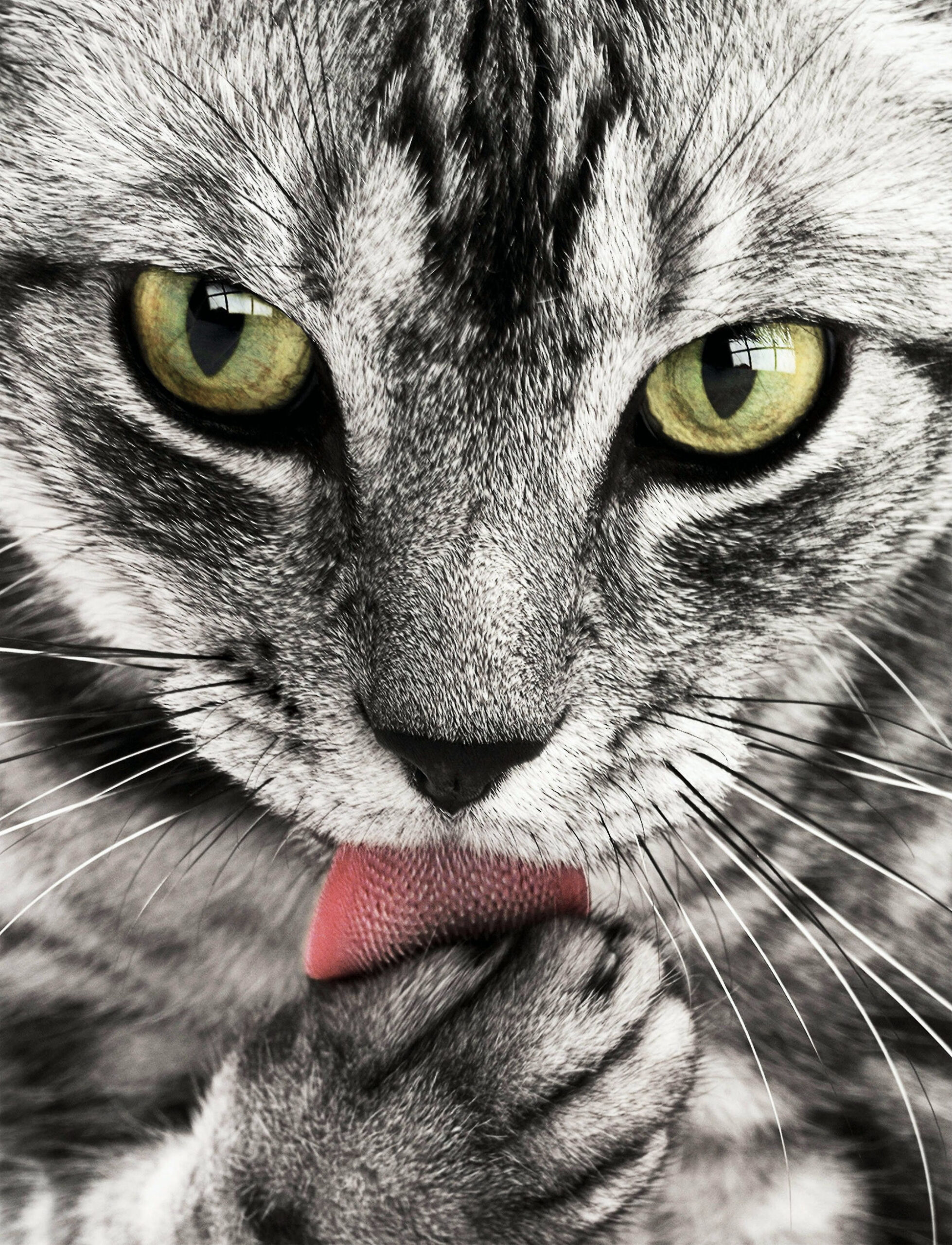
Grooming is a soothing activity for cats that also helps them manage their fur and regulate their temperatures. However, the fur they ingest can sometimes condense in their digestive tracts.
Fun fact: kittens don’t usually have hairballs because it takes time for that much fur to accumulate in their systems. Also, longhaired cats don’t usually get their full, long coats till after 9 months so hairballs aren’t usually an issue for youngsters.
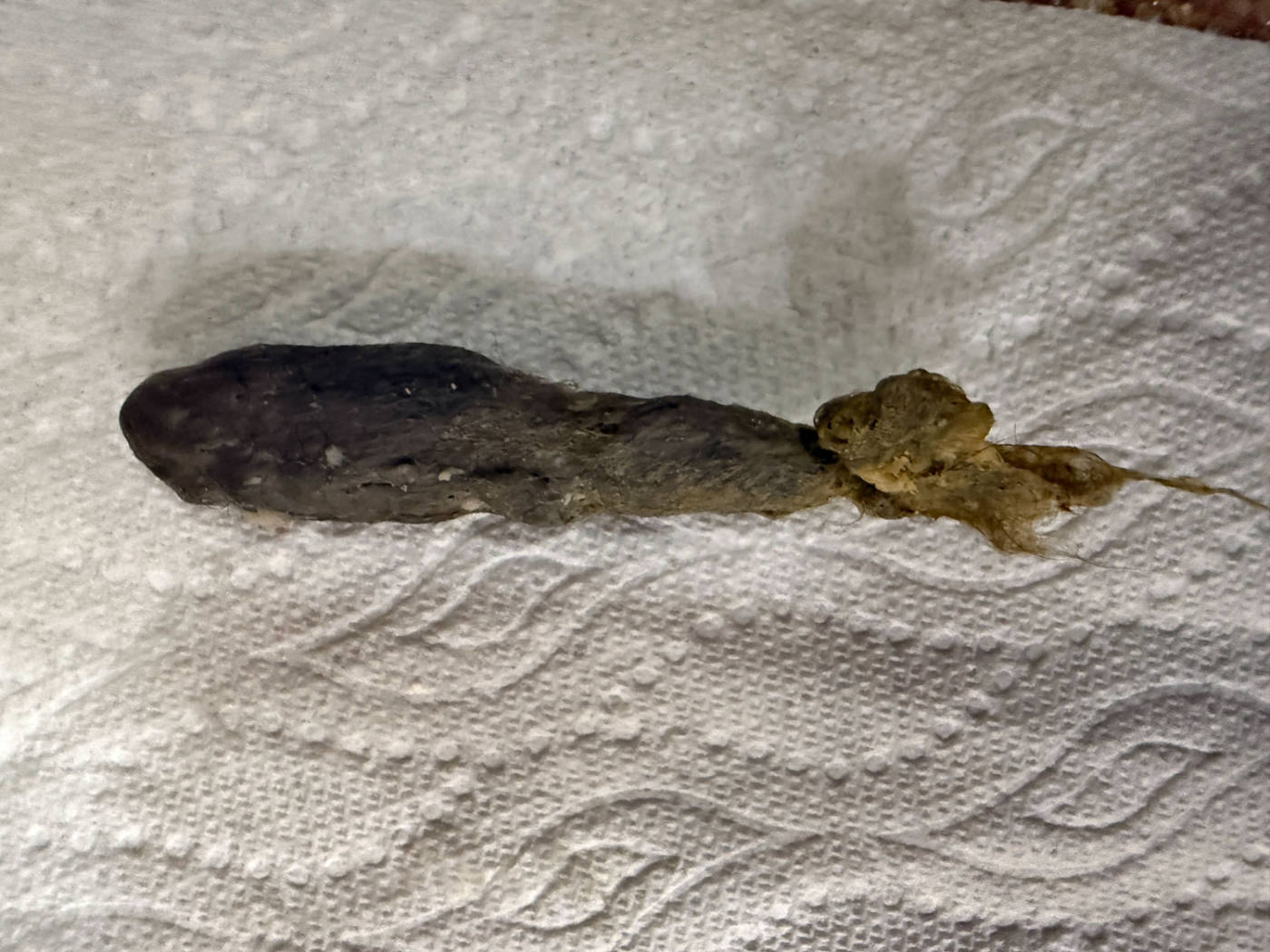
Hairballs aren’t usually ball-shaped. They’re usually compacted fur that’s shaped like little sausages, the same shape as cats’ intestines. The problem is that fur isn’t digestible.
Longhaired cats can be more prone to hairballs than shorthaired cats, but all cats are susceptible. Experts say it’s normal for a cat to vomit a hairball every few weeks.
Working up a hairball can affect your cat’s whole digestive system. Depending on the size of the hairball, the process can take a few days and can also cause diarrhea and reduced appetite. These should pass within a day or two, just like the hairball.
It’s actually a good sign when a cat has these occasional hairballs. It’s much more dangerous for the hairball to try to work its way down through the digestive tract than it is for it to come out the top.
It’s good to be in touch with how frequently your cat leaves hairballs. The ones that aren’t regurgitated are the scary ones as they can get lodged in the small intestine and block it.
Symptoms for hairball blockages include reduced appetite, lethargy and hacking without producing anything. This is rare, but something to be aware of as your kitty ages.
There are several things you can do to help your kitty with hairballs. The most effective is to help with grooming.
It can be hard to keep up with shedding fur if you’re a longhaired cat, especially if you’re getting older. If your kitty’s grooming is noticeably going downhill, one of the first things to check is to make sure his mouth and teeth aren’t hurting.
Grooming can be a bonding experience if you go slowly, introduce a tool that your kitty finds comfortable and do it regularly but stop when he says no. The more fur you can eliminate with grooming, the less your cat will have to take care of.
Making sure your kitty has enough moisture in the diet can also help with hairballs. Cats are desert animals, so they aren’t hardwired to seek water. The easiest way to help with that is to feed more moisture rich food, like canned or raw, and reduce the amount of kibble as that can dehydrate them.
On the other hand, if your kitty is vomiting quite often, you could be facing a completely different issue. Most experts say you should be concerned if the vomiting occurs more than once a week.
This is especially true if there is lethargy or changes in appetite or thirst levels. Vomiting can dehydrate a cat very quickly. It’s time to have your kitty checked out with your veterinarian if that’s the case.
Excessive vomiting can be a symptom of several health issues. Vomiting clear bile can be a sign of stress, like changes in routine or bringing in a new family member. But it could be something else going on in the intestinal tract, like inflammatory bowel disease, constipation, parasites or a mass.
Something more systemic can also show up with excessive vomiting, like hyperthyroidism, kidney disease or diabetes.
Your veterinarian will probably want to start with an exam, a fecal sample and bloodwork, moving on to x-rays or an ultrasound if needed.
If your kitty is occasionally leaving you little furry sausages, you could try to see them as gifts. He’s showing you he has a healthy feline system working just the way it was meant to!
Tap here for more tips on how to have a happy cat!
 Sara Ferguson is the Director of Happy Cats Haven, where hairballs are part of life with cats.